


























How to Open a Bank Account in Rwanda 2026: Requirements & Steps
Learn how to open a bank account in Rwanda in 2026. Check requirements, documents, account types, fees and how to apply at a bank or online.


How to Open a Bank Account in Rwanda 2026: Requirements & Steps
Opening a bank account in Rwanda is now easier than it used to be. Depending on the bank and the type of account you want, you may be able to apply at a branch or start the process digitally using a mobile banking app.
A bank account can help you receive your salary, save money, make payments, send and receive transfers, access digital banking services and build a financial history.
In this guide, Fyndin explains how to open a bank account in Rwanda in 2026, what documents you may need, the different types of accounts available and what to consider before choosing a bank.
Quick Answer
To open a bank account in Rwanda, you generally need a valid identification document and information required by the bank for customer verification. Requirements vary depending on the bank and account type.
Some banks allow customers to start or complete account opening digitally, while others require an application at a branch. For example, Bank of Kigali offers self-service account opening through the BK Mobile App, while I&M Bank Rwanda lists a National ID or passport, account-opening forms and other supporting information among its requirements for personal accounts.
Table of Contents
- Who Can Open a Bank Account in Rwanda?
- Types of Bank Accounts in Rwanda
- Requirements to Open a Bank Account
- How to Open a Bank Account in Rwanda
- Can You Open a Bank Account Online?
- Bank Accounts for Students
- How Much Does It Cost to Open a Bank Account?
- How to Choose a Bank in Rwanda
- What You Can Do With a Bank Account
- Common Mistakes to Avoid
- Frequently Asked Questions
Who Can Open a Bank Account in Rwanda?
Rwandan citizens can open personal bank accounts if they meet the bank's identification and account requirements.
Foreign residents and other eligible customers may also be able to open accounts, but the required documents can differ depending on their residency status, nationality and the type of account.
Businesses, organizations and other legal entities can also have bank accounts, but business accounts normally require additional registration and company documents.
The exact eligibility requirements should therefore be confirmed with the bank you choose before submitting an application.
Types of Bank Accounts in Rwanda
Before opening an account, decide what you want to use it for. Banks in Rwanda offer different account products for different needs.
1. Current Account
A current account is generally designed for frequent transactions. It can be useful for people who receive salaries, operate businesses or regularly make payments and transfers.
Some current accounts may include access to debit cards, cheque books, mobile banking and internet banking.
2. Savings Account
A savings account is designed primarily for saving money. Depending on the product, you may earn interest on your balance or have specific conditions on withdrawals.
This can be a better option if your main goal is to keep money aside rather than make frequent transactions.
3. Student Account
Some banks provide accounts specifically for students and young customers. These accounts may have lower or no maintenance fees and can include digital banking services.
Requirements may include a student identification card or admission document in addition to identification.
4. Fixed Deposit Account
A fixed deposit account allows you to place money with a bank for a specified period. These accounts are generally intended for people who want to save money for a particular period rather than use it for everyday transactions.
5. Business Account
A business bank account is intended for companies, entrepreneurs and organizations. The bank may require documents such as business registration documents, a trading licence and information about authorized signatories.
Requirements to Open a Bank Account in Rwanda
The documents required depend on the bank and the account you choose. However, you should normally expect the bank to request identification and personal information needed to verify your identity.
Common requirements for an individual account
- Valid National ID or another accepted identification document
- Completed account-opening form
- Active mobile phone number
- Personal information such as your address and occupation
- Passport-size photographs where required
- Signature specimen where required
- Additional documents depending on the account type
For example, I&M Bank Rwanda currently lists a National ID or passport, a completed account-opening form, signature cards, recent colour passport photographs and an introductory reference among the requirements for its personal current account.
Requirements can change, so always check the specific bank's current requirements before visiting a branch.
How to Open a Bank Account in Rwanda
Step 1: Decide what you need the account for
Start by deciding whether you need an account for daily transactions, saving, receiving a salary, studying, running a business or another purpose.
This will help you choose the appropriate account instead of opening an account based only on the name of the bank.
Step 2: Compare banks and account types
Compare the account products offered by different banks.
Pay attention to:
- Account opening requirements
- Monthly maintenance fees
- Minimum opening balance
- Minimum account balance
- ATM and card charges
- Mobile banking fees
- Internet banking availability
- Transfer charges
- Branch and ATM accessibility
- Customer support
Don't choose a bank only because it has a branch close to you. A low-cost account with reliable digital banking may be more convenient for everyday use.
Step 3: Prepare your documents
Prepare your identification document and any other documents required for the account you want.
If you are opening a student, business, joint or specialized account, check whether additional documentation is required before starting the application.
Step 4: Apply at a branch or through an available digital channel
Some banks allow customers to open certain accounts through their mobile applications, while others may require you to visit a branch.
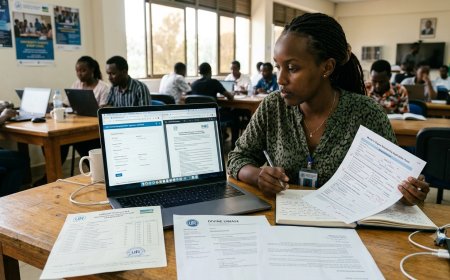
If you are applying at a branch, a bank representative will normally provide the account-opening form and guide you through the required information.
If digital account opening is available, follow the bank's official instructions and make sure the information you submit matches your identification documents.
Step 5: Complete identity verification
The bank will verify your information before activating the account. Depending on the application method, this may involve submitting identification details, photographs, signatures or other information.
Step 6: Fund the account if required
Some account types may require an opening deposit or minimum balance. Others may have no opening balance requirement.
For example, I&M Bank Rwanda's current account information states that account opening is free, while its current account opening form lists a minimum opening balance of RWF 10,000.
Always check the specific account's current terms rather than assuming every account at the same bank has the same requirement.
Step 7: Activate your digital banking services
After your account is opened, ask about the bank's mobile banking and internet banking services.
These services can allow you to check your balance, transfer money, make payments and monitor transactions without visiting a branch.
Can You Open a Bank Account Online in Rwanda?
Yes. Some banks in Rwanda now provide digital account-opening options for selected products.
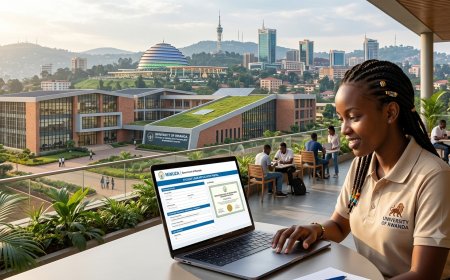
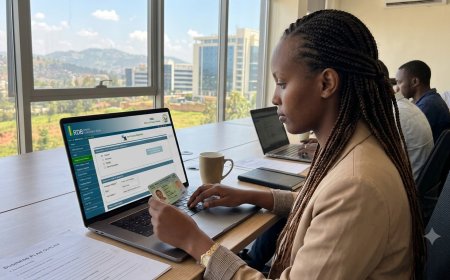
Bank of Kigali, for example, announced a self-service account-opening option through the BK Mobile App. According to the bank, customers can open the supported account without visiting a branch, complete the required information through the app and receive activation after verification.
This means you should check the official website or mobile application of your preferred bank before travelling to a branch.
However, online availability does not necessarily mean that every type of account can be opened digitally. Business, joint and specialized accounts may have additional requirements.
How to Open a Bank Account as a Student in Rwanda
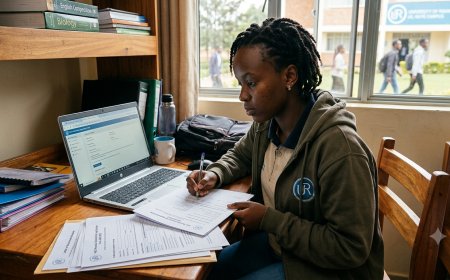
Students can look for accounts specifically designed for young people or students.
These accounts may offer lower fees or features designed for students, although the conditions differ between banks.
For example, I&M Bank Rwanda has a FuturePro Students Account and lists a valid student ID card or admission letter and identification among its requirements.
Before choosing a student account, compare maintenance fees, withdrawal charges, ATM access, mobile banking and what happens to the account when you finish your studies.
How Much Does It Cost to Open a Bank Account in Rwanda?
There is no single account-opening fee that applies to every bank or account in Rwanda.
Some accounts can be opened free of charge, while other products may have opening deposits, minimum balances, monthly maintenance fees or other charges.
For example, I&M Bank Rwanda currently lists zero account-opening fees for its personal current account, while also publishing a monthly maintenance fee and a minimum opening balance for that product.
Bank of Kigali has also advertised a self-service account-opening option with no monthly maintenance fee for the supported account.
Because fees can change and differ by product, check the bank's current tariff before opening an account.
How to Choose the Best Bank Account in Rwanda
There is no single bank account that is best for everyone. The right choice depends on how you plan to use your money.
If you receive a salary
Look for an account with convenient salary processing, affordable transfers, reliable mobile banking and easy access to ATMs.
If you are a student
Look for low maintenance fees, affordable withdrawals and mobile banking services that are easy to use.
If you mainly want to save
Compare savings interest rates, withdrawal conditions, minimum balances and account fees.
If you run a business
Look at transaction limits, business banking services, internet banking, payment options and the documents required to operate the account.
If you travel or receive money from abroad
Check whether the bank supports international transfers, foreign-currency accounts, cards and other services that match your needs.
What Can You Do With a Bank Account in Rwanda?
Once your account is active, you may be able to use it for many everyday financial activities, depending on the services offered by your bank.
- Receive your salary
- Deposit and withdraw money
- Transfer money to other bank accounts
- Send money to mobile money accounts
- Pay bills
- Pay for goods and services
- Use a debit or ATM card
- Access internet banking
- Use mobile banking
- Receive international transfers
- Save money
- Apply for certain financial products
For example, I&M Bank's I-Click internet banking service allows customers to manage accounts, make transfers, view statements, pay taxes and transfer funds from a bank account to Mobile Money.
Common Mistakes to Avoid When Opening a Bank Account
1. Choosing an account without checking the fees
An account may be free to open but still have monthly maintenance or transaction charges. Check the complete tariff before making your decision.
2. Ignoring the minimum balance
Some accounts require a minimum balance or opening deposit. Make sure you understand this requirement.
3. Giving incorrect personal information
Make sure your name, identification number, phone number and other information are accurate and consistent with your official documents.
4. Sharing your PIN or password
Never give your banking PIN, password or one-time verification code to another person. Bank employees should not ask you to disclose confidential security credentials.
5. Using unofficial links
When applying online, use the bank's official website or official mobile application. Avoid links sent through suspicious messages or social media accounts.
Frequently Asked Questions
Can I open a bank account in Rwanda with a National ID?
Yes. A National ID is accepted by banks for many personal account applications, although the exact requirements depend on the bank and account type.
Can a foreigner open a bank account in Rwanda?
Foreigners may be able to open eligible accounts, but the bank may require a passport, residency documentation and other supporting documents. Requirements vary, so contact the bank before applying.
Can I open a bank account online in Rwanda?
Yes. Some banks offer digital account-opening services for selected accounts. Bank of Kigali, for example, provides self-service account opening through its BK Mobile App for a supported account.
How much money do I need to open a bank account?
There is no universal amount. Some accounts can be opened without an opening fee, while others require an initial deposit or minimum balance.
Can students open bank accounts in Rwanda?
Yes. Some banks offer student or youth accounts with requirements designed for students.
Can I have accounts at more than one bank in Rwanda?
Yes. A person can have accounts with different banks, subject to the banks' account-opening and customer-verification requirements.
Which documents should I carry when visiting a bank?
For a personal account, carry your valid identification document and any supporting documents required for the account. It is also useful to have your active phone number and any documents relating to your student, employment or business status if applicable.
Final Thoughts
Opening a bank account in Rwanda does not have to be complicated. The most important step is choosing an account that matches the way you actually use your money.
Before applying, compare the bank's fees, minimum balance, digital banking services, ATM access and account requirements. If the bank offers online account opening, check whether the specific account you want is eligible for digital onboarding.
For the latest requirements and charges, always confirm the information directly with the bank because account products and tariffs can change.
What's Next?
If you are comparing banks in Rwanda, Fyndin will also cover specific guides on opening accounts, mobile banking, bank transfers, fees and other everyday financial services.
Official Sources
- Bank of Kigali – Self-Service Account Opening
- I&M Bank Rwanda – Personal Current Account
- I&M Bank Rwanda – I-Click Internet Banking
- National Bank of Rwanda (BNR)
Last reviewed: September 2026
What's Your Reaction?
 Like
0
Like
0
 Dislike
0
Dislike
0
 Love
0
Love
0
 Funny
0
Funny
0
 Angry
0
Angry
0
 Sad
0
Sad
0
 Wow
0
Wow
0