

































Land Prices in Rwanda 2026: Kigali & Nationwide Guide
Land prices in Rwanda 2026: Explore Kigali and nationwide land prices, cost per square metre, popular areas, buying costs, and tips for buyers.

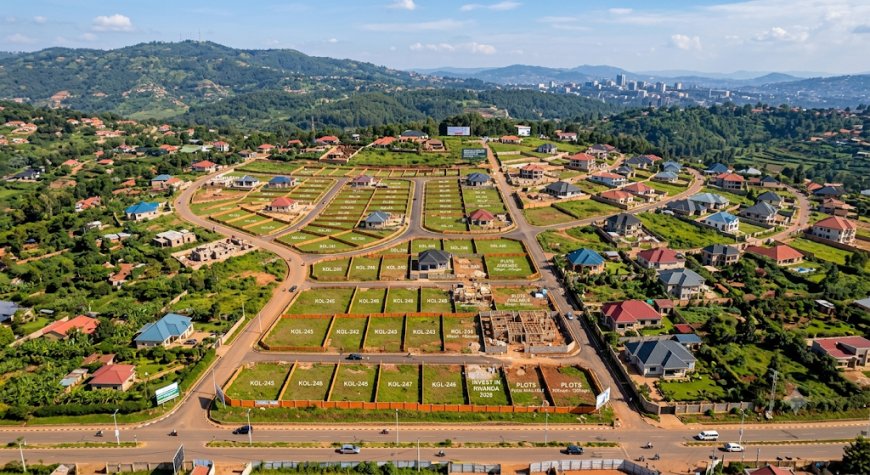
Land Prices in Rwanda 2026: Kigali & Nationwide Price Guide
Land prices in Rwanda vary significantly depending on location, plot size, zoning, road access, development potential and legal status. In Kigali, land in established and high-demand neighbourhoods can cost substantially more than land in developing or rural areas.
Last updated: September 2026
This guide explains land prices in Rwanda, Kigali land prices, price per square metre, factors that affect land value, how to verify a plot before paying, and important costs and procedures buyers should understand.
Table of Contents
- Land Prices in Rwanda at a Glance
- Land Prices in Kigali in 2026
- Land Prices by Kigali Area
- Land Prices Outside Kigali
- Land Price Per Square Metre
- Official Reference Prices vs Market Prices
- What Determines Land Prices?
- How Much Land Can You Buy With Your Budget?
- How to Verify Land Before Buying
- Land Transfer in Rwanda
- Other Costs to Consider
- How to Negotiate Land Price
- Common Land-Buying Mistakes
- Frequently Asked Questions
Land Prices in Rwanda at a Glance
Land prices differ greatly across Rwanda. Location is usually one of the biggest factors, but the same neighbourhood can also contain large differences between individual plots.
| Location / Area | Indicative Market Range | Typical Characteristics |
|---|---|---|
| Nyarutarama | About RWF 150,000–300,000+ per m² in some market estimates | Premium residential area |
| Kimihurura | About RWF 100,000–200,000+ per m² in some market estimates | High-demand central Kigali area |
| Kacyiru | About RWF 80,000–150,000+ per m² in some market estimates | Established residential and institutional area |
| Kimironko | About RWF 30,000–70,000+ per m² in some market estimates | Popular residential and commercial area |
Important: These figures are indicative market estimates, not government-fixed selling prices. Individual plots can be above or below these ranges depending on size, road access, zoning, title status, neighbourhood and seller expectations.
Land Prices in Kigali in 2026
Kigali generally has some of the highest land prices in Rwanda because of population growth, urban development, infrastructure, business activity and demand for residential and commercial property.
However, it is misleading to say that all Kigali land has one standard price. A plot near a major road, commercial centre or established neighbourhood may be worth considerably more than a similarly sized plot farther from major infrastructure.
Why Kigali land can be expensive
- High demand for residential property
- Limited availability of well-located plots
- Road and infrastructure accessibility
- Commercial development potential
- Approved land-use plans
- Proximity to major roads and city centres
- Neighbourhood reputation
- Future development potential
Land Prices by Kigali Area
Market estimates published in 2026 show significant differences between Kigali neighbourhoods.
| Area | Indicative Price Range | Typical Plot Size |
|---|---|---|
| Nyarutarama | RWF 150,000–300,000+ per m² | Approximately 300–500 m² |
| Kacyiru | RWF 80,000–150,000+ per m² | Approximately 300–500 m² |
| Kimihurura | RWF 100,000–200,000+ per m² | Approximately 300–600 m² |
| Kimironko | RWF 30,000–70,000+ per m² | Approximately 400–700 m² |
These figures should be treated as a starting point for research rather than a valuation of a specific property.
Examples of broader Kigali market estimates
Depending on location and plot characteristics, some 2026 market guides have placed plots in areas such as Bumbogo, Rusororo, Kinyinya, Gacuriro, Rebero, Kimironko, Nyarutarama, Kimihurura and Kacyiru across very different price ranges.
For example, premium neighbourhoods such as Nyarutarama, Kimihurura and Kacyiru can reach hundreds of millions of Rwandan francs for appropriately sized plots, while developing areas may offer substantially lower entry prices.
Do not use a neighbourhood-wide figure as proof that a particular plot is worth that amount. The actual property should be evaluated individually.
Land Prices Outside Kigali
Land outside Kigali can be considerably cheaper, but there are important exceptions. Areas close to major roads, tourist destinations, industrial zones, growing towns and major development projects may command higher prices.
Bugesera
Bugesera has experienced increasing interest because of infrastructure development, urban expansion and its proximity to Kigali. Land prices can vary dramatically depending on whether the property is agricultural, residential, commercial or located near a major development corridor.
A small residential plot near an established centre should not be compared directly with large agricultural land several kilometres away.
Other districts
In districts such as Musanze, Rubavu, Huye, Rwamagana, Muhanga and other growing urban areas, prices can also vary substantially between central urban plots, suburban plots and agricultural land.
The most useful comparison is therefore not simply district versus district. Compare properties with similar land use, size, accessibility and development potential.
How Much Is Land Per Square Metre in Rwanda?
Price per square metre is one of the easiest ways to compare different land offers.
Formula:
Price per m² = Total land price ÷ Land size in m²
| Total Price | Land Size | Price per m² |
|---|---|---|
| RWF 30,000,000 | 500 m² | RWF 60,000/m² |
| RWF 50,000,000 | 500 m² | RWF 100,000/m² |
| RWF 80,000,000 | 400 m² | RWF 200,000/m² |
| RWF 150,000,000 | 600 m² | RWF 250,000/m² |
Remember that a lower price per square metre does not automatically mean a better deal. A cheaper plot may have poor road access, development restrictions, difficult terrain or another factor reducing its usefulness.
Official Land Reference Prices vs Current Market Prices
This is one of the most important things to understand when researching land prices in Rwanda.
Rwanda's official land reference-price system should not automatically be interpreted as the current private-market selling price of every plot.
Reporting in September 2026 indicated that the official land reference-price list had not been revised since 2021 and that revised reference prices were still awaiting Cabinet approval. The new list is intended to better reflect current market conditions.
The existing reference prices can therefore be useful for understanding official valuation frameworks, but buyers should not assume that the reference figure is necessarily the amount a seller will accept—or the amount a particular plot is actually worth on the open market.
For example, The New Times reported in March 2026 that a 300 m² plot in Bugesera was being offered for around RWF 8 million, equivalent to approximately RWF 26,000 per m², while the older official reference figure cited for that location was RWF 2,600 per m².
What Determines Land Prices in Rwanda?
1. Location
Location is usually one of the strongest factors. Land close to major roads, commercial centres, schools, hospitals and other facilities can command higher prices.
2. Land use and zoning
A plot approved for residential, commercial, industrial or another use can have a very different value from agricultural land.
Always check the applicable physical plan before assuming that a plot can be used for your intended project.
3. Road access
A plot with reliable road access is generally more attractive than land that is difficult to reach.
4. Plot size and shape
Two plots with the same price per square metre may have different practical values if one has a more useful shape or better frontage.
5. Terrain
Steep slopes can increase construction costs. A seemingly cheap plot may become expensive after considering excavation, retaining walls, drainage and foundation requirements.
6. Infrastructure
Access to electricity, water, roads, drainage and other infrastructure can affect both the market value and development cost of land.
7. Legal status
Land with clear ownership documentation and no unresolved disputes is generally easier to transact than land with legal or documentation problems.
8. Future development
Expected roads, commercial development and urban expansion can influence prices, although buyers should be careful not to pay a premium based only on rumours about future projects.
How Much Land Can You Buy With Your Budget?
| Budget | What You May Find |
|---|---|
| Under RWF 10 million | Smaller or less-developed opportunities, particularly outside prime urban areas |
| RWF 10–30 million | More options in developing areas and some locations outside Kigali |
| RWF 30–60 million | Potential residential opportunities in selected Kigali and urban/peri-urban areas |
| RWF 60–100 million | More options in established or high-demand areas |
| RWF 100 million+ | Premium residential, commercial or strategically located properties |
This table is only a budgeting guide. The same amount of money can buy dramatically different land depending on location, size, zoning and market conditions.
How to Verify Land Before Buying in Rwanda
Never pay a large amount simply because a seller shows you a land title. Verify the property and ownership through the appropriate official channels.
Step 1: Get the UPI
Ask for the property's Unique Parcel Identifier (UPI). The UPI is an important reference for identifying a parcel in Rwanda's land-registration system.
Step 2: Verify ownership
Confirm that the person selling the land has the legal right to sell it and that the information corresponds with the land records.
Step 3: Check land use
Confirm whether the land is residential, agricultural, commercial, industrial or subject to another planned use.
Step 4: Check for restrictions or problems
Ask about mortgages, disputes, unpaid obligations, succession issues, restrictions and other matters that could affect transfer.
Step 5: Visit the property
Do not rely entirely on online advertisements. Visit the land and confirm boundaries, access roads, surrounding development and the physical condition of the site.
Step 6: Compare similar properties
Check several comparable properties before agreeing to a price. Compare:
- Price per square metre
- Plot size
- Neighbourhood
- Land use
- Road access
- Utilities
- Terrain
- Title status
How Land Transfer Works in Rwanda
Rwanda provides several land-related services through IremboGov and the National Land Authority, including title transfers, subdivision, succession and other land-registration services.
For a voluntary sale, the buyer and seller need the relevant identification and land documentation, and the transfer is processed through the appropriate land-service process.
Irembo's current guidance indicates that voluntary-sale title transfers are generally processed within 7 working days after the required process is completed. Costs can depend on the notarisation option used.
Land subdivision is also available through IremboGov. Current guidance states that the subdivision service is free and has a stated processing time of 30 working days, subject to the applicable requirements.
Because service requirements and fees can change, always confirm the current requirements on IremboGov before submitting an application.
Other Costs to Consider When Buying Land
The purchase price is not necessarily your total cost.
Professional valuation
If you are buying expensive land or need an independent assessment, a professional property valuation can help you understand whether the asking price is reasonable.
Notary and transaction costs
Depending on the transaction and notarisation option, additional fees may apply.
Construction costs
If you intend to build, remember that land is only one part of the investment. Site preparation, foundations, materials, labour, architectural services, permits, utilities and infrastructure can substantially increase the total project cost.
Property taxes
Land and buildings can also be subject to applicable property taxes. Check the current Rwanda Revenue Authority rules before budgeting for long-term ownership.
How to Negotiate Land Price in Rwanda
Good negotiation starts with evidence rather than simply asking the seller to reduce the price.
- Calculate the price per square metre.
- Compare at least three similar properties.
- Check the land-use designation.
- Consider road access and utilities.
- Check whether the plot requires significant site preparation.
- Identify any legal or documentation issues.
- Use an independent valuation for high-value transactions.
If a seller asks RWF 100 million for a plot, for example, do not negotiate solely by saying that the price is too high. Determine how much the property costs per square metre and compare it with similar properties in the same area.
Common Land-Buying Mistakes in Rwanda
1. Buying because the price looks cheap
A cheap plot can have restrictions, difficult access, disputed ownership or development limitations.
2. Ignoring zoning
You may have a plan to build a house only to discover that the applicable land-use plan does not support your intended development.
3. Trusting verbal promises
Important agreements should be properly documented and processed through the appropriate legal channels.
4. Paying before verification
Verify the property and ownership before making a major payment.
5. Comparing different types of land
Comparing agricultural land with a serviced residential plot in Kigali will give you a misleading idea of the market.
6. Forgetting development costs
A low land price does not necessarily mean a low total project cost.
Land vs House: Which Is Better?
The answer depends on your financial goals.
| Buying Land | Buying a House |
|---|---|
| Lower initial development commitment in some cases | Can provide immediate accommodation or rental income |
| Potential for long-term appreciation | Already has an existing structure |
| You control future development | Less waiting for construction |
| Requires future construction investment | Building condition must be assessed |
For investors, the best option depends on location, financing, intended use, expected appreciation, rental demand and development costs.
Is Land in Rwanda a Good Investment?
Land can be an attractive long-term asset, but it is not automatically a profitable investment.
The strongest opportunities usually depend on buying a legally secure property in an area with sustainable demand and realistic development potential.
Do not buy land solely because someone tells you that its price will double soon. Research the location, zoning, infrastructure plans, comparable transactions and potential future demand.
Frequently Asked Questions About Land Prices in Rwanda
How much does land cost in Rwanda?
There is no single national price. Land prices range from relatively affordable plots in some rural and developing areas to hundreds of millions of Rwandan francs for premium properties in Kigali.
How much is land in Kigali?
Kigali land prices vary significantly by neighbourhood. Premium areas such as Nyarutarama, Kimihurura and Kacyiru can command much higher prices than developing or peripheral areas.
What is the price of land per square metre in Rwanda?
It depends on location, land use and property characteristics. Market estimates in Kigali can range from tens of thousands of Rwandan francs per square metre in some areas to several hundred thousand francs per square metre in premium locations.
Are Rwanda's official land reference prices the same as market prices?
No. Official reference prices and actual private-market asking prices should not be treated as identical. In 2026, Rwanda was working on updated reference prices because the existing list had not been revised since 2021.
How can I know whether a land price is fair?
Compare the property's price per square metre with similar properties in the same area, consider zoning and infrastructure, verify the legal status and, for high-value purchases, consider obtaining a professional valuation.
Can foreigners buy land in Rwanda?
Land ownership and use by foreigners can be subject to Rwanda's applicable laws and requirements. Anyone who is not a Rwandan citizen should confirm the current legal requirements before entering a transaction.
How do I verify land before buying?
Obtain the UPI and relevant land documents, verify ownership and land-use information through the appropriate official channels, inspect the physical property and ensure the transaction is properly documented.
How long does land subdivision take in Rwanda?
Current IremboGov guidance states that land subdivision has a processing time of 30 working days and is free of charge, subject to the service requirements.
How long does a voluntary land transfer take?
Current IremboGov guidance states that voluntary-sale title transfer processing takes 7 working days, although the complete transaction timeline can depend on the circumstances and required steps.
Final Advice for Anyone Buying Land in Rwanda
The biggest mistake you can make when researching land prices in Rwanda is focusing only on the amount written in an advertisement.
The real value of a plot depends on its location, size, land use, access, infrastructure, terrain, legal status and development potential.
Before paying, always:
- Calculate the price per square metre.
- Compare similar properties.
- Verify the UPI and ownership.
- Check the applicable land-use plan.
- Inspect the property physically.
- Confirm there are no unresolved legal problems.
- Understand transfer and notarisation requirements.
- Consider professional valuation for high-value purchases.
Fyndin tip: Treat online asking prices as starting points for research—not as official valuations. For an important property purchase, independent verification is far more valuable than simply finding the cheapest advertised plot.
Related Fyndin Guides
- Car Prices in Rwanda 2026
- Fuel Prices in Rwanda Today 2026
- House Prices in Rwanda 2026
- Cost of Building a House in Rwanda
- How to Transfer Land Ownership in Rwanda
- How to Check Land Title Information in Rwanda
- How to Use Irembo Land Services in Rwanda
Sources & Disclaimer
This guide uses information from Rwanda's official land-service platforms and reputable reporting about Rwanda's land market. Market-price ranges are indicative and should not be interpreted as official government valuations.
Land prices can change quickly. Always verify the latest price, ownership information, land-use status, applicable fees and transaction requirements before making a purchase.
What's Your Reaction?
 Like
0
Like
0
 Dislike
0
Dislike
0
 Love
0
Love
0
 Funny
0
Funny
0
 Angry
0
Angry
0
 Sad
0
Sad
0
 Wow
0
Wow
0