





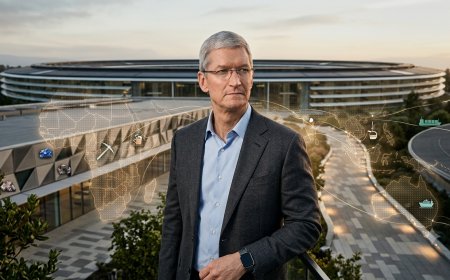

Tim Cook Steps Down as Apple CEO After 15 Years: What His Exit Means for Africa
Tim Cook has stepped down as Apple CEO after 15 years. Here's what his leadership legacy, Apple's future, and Africa's role in the global technology supply chain mean.

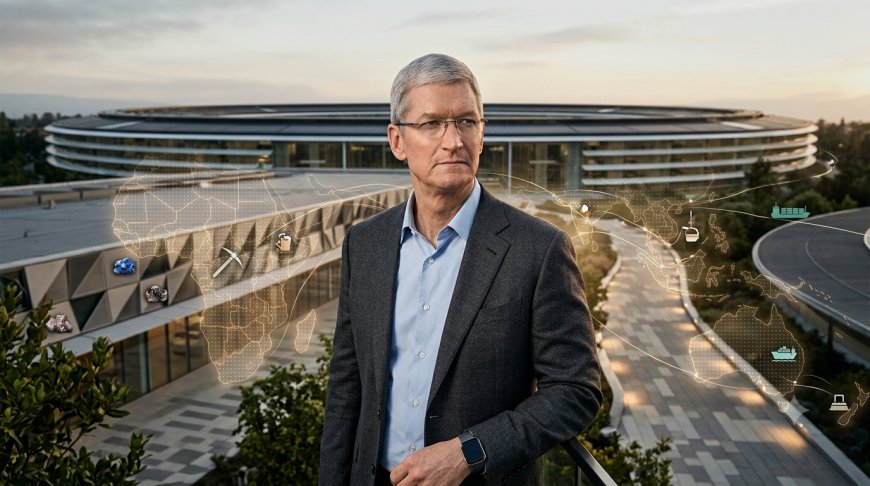
Tim Cook Steps Down as Apple CEO After 15 Years: What His Exit Means for Africa
Tim Cook has stepped down as Apple's chief executive after 15 years at the helm, marking the end of one of the most successful leadership eras in modern technology.
Cook officially handed the CEO position to John Ternus on September 1, 2026. However, Cook has not completely left Apple. He has moved into the role of executive chairman, where he will continue to play a role in the company's future.
The leadership change comes as Apple remains one of the world's most valuable companies, with its market value reaching roughly $4.5 trillion. At the same time, the company faces a new era shaped by artificial intelligence, changing global supply chains and increasing competition in the technology industry.
For Africa, however, Apple's leadership change raises a broader question: what has Apple's extraordinary growth meant for a continent that plays an important role in the global technology supply chain?
A 15-Year Transformation at Apple
When Tim Cook became Apple's CEO in 2011, the company was already one of the world's most influential technology businesses. Over the following 15 years, Cook helped transform Apple into an even larger global company.
His leadership focused heavily on operational efficiency, supply-chain management, services and expanding Apple's ecosystem around the iPhone.
During Cook's tenure, Apple expanded products and services including the Apple Watch, AirPods, Apple Silicon, Apple Music, iCloud, Apple TV and the App Store.
Apple also moved away from relying on Intel processors for its Mac computers and began developing its own Apple Silicon chips, giving the company greater control over its hardware and software.
Cook's legacy is therefore different from that of Steve Jobs. While Jobs was widely associated with product vision and design, Cook became known for turning Apple's global operations into an extraordinarily powerful and profitable business.
Tim Cook Isn't Actually Leaving Apple
Although some headlines describe Cook as leaving Apple, that description needs some clarification.
Cook has stepped down from the CEO position, but he remains at Apple as executive chairman.
This means the leadership transition is not a complete departure. Cook is expected to remain involved with Apple's broader strategy and relationships with governments and policymakers.
For Apple, the change represents a transfer of day-to-day leadership rather than the end of Cook's relationship with the company.
John Ternus Takes Over Apple
John Ternus now becomes one of the most powerful executives in the technology industry.
Ternus has spent many years at Apple and previously led the company's hardware engineering organization. He has been involved in the development of major Apple products and technologies, including the company's transition to Apple Silicon.
His appointment comes at a particularly important moment.
Artificial intelligence is changing the technology industry, and Apple is under increasing pressure to demonstrate that it can compete effectively in the AI era.
Ternus will therefore have to maintain Apple's strength in hardware while helping the company navigate a rapidly changing technology landscape.
Where Africa Fits Into Apple's Technology Supply Chain
Apple's products depend on a huge international supply chain involving manufacturers, component suppliers, logistics companies and raw materials from different parts of the world.
Africa is important to the wider technology supply chain because the continent possesses significant reserves of minerals that are essential to modern industries.
These include cobalt, copper, lithium, manganese, tantalum, tungsten and gold, among others.
These materials are used across industries connected to electronics, batteries, renewable energy and other advanced technologies.
However, there is an important distinction when discussing Apple's relationship with African minerals.
Apple says that it does not directly purchase or procure primary minerals from mine sites. Instead, it works through its global supplier network and requires suppliers to follow responsible sourcing policies.
This means it would be misleading to suggest that Apple simply buys minerals directly from African mines. The bigger issue is Apple's position within a global technology supply chain that depends on materials sourced from many countries.
Africa's Critical Minerals Opportunity
The rapid growth of artificial intelligence, electric vehicles, smartphones, renewable energy and advanced computing is increasing global demand for critical minerals.
For Africa, this could represent one of the continent's biggest economic opportunities in decades.
But there is a major challenge: much of Africa's mineral wealth is still exported as raw or relatively unprocessed material, while more profitable stages of the value chain often happen elsewhere.
That means African countries can possess valuable natural resources without capturing a proportional share of the economic value created from them.
The opportunity is therefore not simply to mine more minerals. It is to develop the industries that come after mining.
From Mining to Technology
Africa could capture more value from its natural resources by developing local processing and manufacturing capabilities.
That could include:
- Processing critical minerals locally
- Developing battery-material industries
- Building electronics manufacturing capacity
- Training engineers and technical specialists
- Supporting African technology startups
- Developing renewable-energy infrastructure
- Building stronger research and innovation ecosystems
Such investments could create skilled employment while helping African countries participate more deeply in the global technology economy.
Has Apple Invested Enough in Africa?
This is a more complicated question.
Apple's ecosystem reaches Africa through products, services, developers and digital platforms. African developers can build applications for Apple's platforms and distribute them to customers around the world.
However, Apple's physical and industrial footprint across much of Africa remains relatively limited compared with its presence in major markets in North America, Europe and Asia.
That has led to a wider debate about how multinational technology companies should engage with the continent.
Africa is not only a source of minerals. It is also home to more than a billion people, a young population, rapidly expanding digital markets and a growing technology startup ecosystem.
The opportunity for companies like Apple is therefore much larger than simply selling devices.
Africa Wants More Than Raw Materials
The conversation around Africa's mineral resources is increasingly moving toward value addition.
Instead of exporting raw materials and importing finished products, African countries are looking for ways to participate in more stages of the global value chain.
That could eventually mean refining minerals, manufacturing components, producing batteries, developing software and creating technology companies that serve global markets.
This approach could generate more jobs, strengthen local industries and increase the economic benefits of Africa's natural resources.
Why the AI Era Could Change the Equation
The rise of artificial intelligence adds another dimension to the discussion.
AI requires enormous amounts of computing power, data infrastructure, energy and advanced hardware. That means the technology industry will continue to depend on complex global supply chains.
Africa has an opportunity to participate in this transformation through data centers, renewable energy, software development, AI startups, cloud infrastructure and digital skills.
Countries that invest early in these areas could benefit from the next generation of technological growth.
What Tim Cook's Departure Could Mean for Africa
It would be too early to claim that Apple's leadership change will dramatically alter the company's relationship with Africa.
There is no indication that Africa will suddenly become Apple's central strategic priority simply because Cook has stepped down.
However, the timing is significant.
Apple is entering a period of intense competition in artificial intelligence while global companies are reconsidering how and where they build their supply chains.
At the same time, African countries are increasingly seeking greater economic benefits from the minerals, markets and talent that are becoming important to the global technology industry.
Those trends could eventually create new opportunities.
The Bigger Opportunity for Africa
Africa's biggest opportunity may not be to attract one particular technology company.
The bigger goal should be to create an environment where African countries can participate across the entire technology value chain.
That means investing in education, engineering, digital skills, research, manufacturing, reliable electricity, internet infrastructure and entrepreneurship.
If these foundations are built, African businesses will have a better chance of moving from being consumers of global technology to becoming creators of it.
What Happens Next for Apple?
John Ternus inherits a company with enormous financial resources, a globally recognized brand and one of the strongest technology ecosystems in the world.
But expectations will be high.
Apple needs to maintain its leadership in premium hardware while accelerating its response to artificial intelligence and managing increasingly complex global supply chains.
How Ternus handles these challenges could define Apple's next decade.
The Bigger Lesson for Africa
Tim Cook's departure is more than an Apple leadership story.
It is also a reminder of how interconnected the global technology industry has become.
Modern technology depends on minerals, manufacturing, software, engineering talent, logistics and consumers spread across different parts of the world.
Africa has important pieces of this equation.
The challenge is turning those resources into long-term economic and technological power.
The continent should aim to become more than a supplier of raw materials and a consumer of finished technology. It can also become a place where products are designed, software is created, minerals are processed, companies are built and new technologies are developed.
Conclusion
Tim Cook's 15-year era as Apple's CEO has come to an end, but his relationship with Apple is not over. He will continue as executive chairman while John Ternus takes responsibility for running the company.
For Africa, the more important story goes beyond Apple's leadership.
As demand for AI, electronics, batteries and other advanced technologies grows, the continent has an opportunity to capture more value from its natural resources and growing digital economy.
The question is whether Africa can move quickly enough to build the skills, infrastructure and industries required to participate in that future.
Fyndin Takeaway: Apple's next chapter will be shaped by AI, hardware and global competition. Africa's opportunity is to make sure its role in the technology economy goes beyond supplying resources and consuming products — and increasingly includes creating the technology and value of the future.
What's Your Reaction?
 Like
0
Like
0
 Dislike
0
Dislike
0
 Love
0
Love
0
 Funny
0
Funny
0
 Angry
0
Angry
0
 Sad
0
Sad
0
 Wow
0
Wow
0